Introduction
Packing for a family camping trip in Australia can feel like a high-stakes puzzle. Pack too little, and you may find yourself without something important. Pack too much, and your vehicle quickly becomes overloaded with camping gear.
Over the years, our family has camped at a variety of locations across Queensland and New South Wales, from coastal spots such as Amity Point to family-friendly holiday parks like Sandstone Point. Along the way, we have gradually refined the gear we actually use and learned which items are worth packing—and which ones are better left at home.
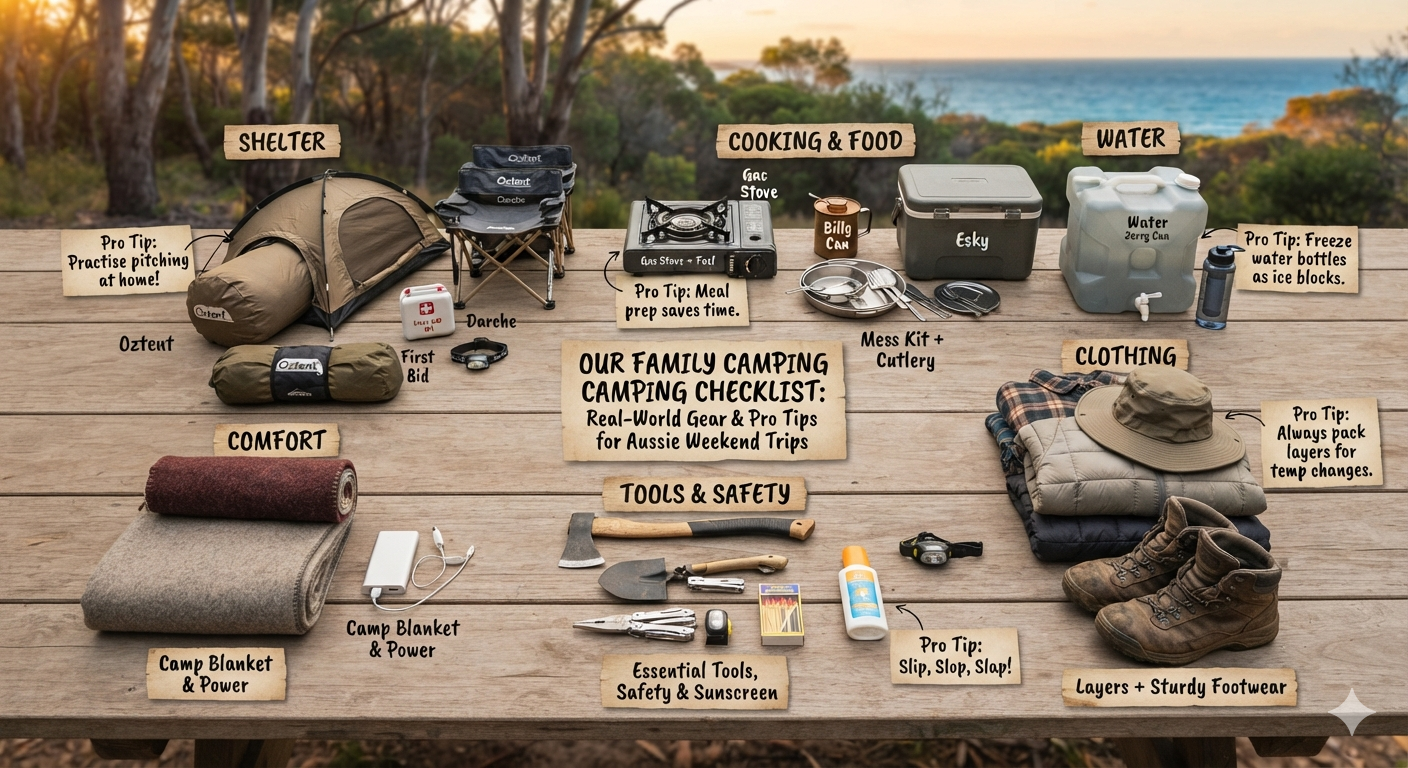
This is our family camping checklist for Australia, based on the equipment, small tricks, and lessons that have made our weekend camping trips easier and more comfortable.
1. Shelter & Sleep System
A comfortable night’s sleep can make the difference between an enjoyable family camping trip and a very tiring one.
Instant Tent: Our Family Favourite
For family camping, we have found an instant tent much easier to manage than a traditional tent that requires a more complicated setup.
We personally use the Coleman Instant Up 8P Lighted Northstar Darkroom Tent. The built-in LED lighting is particularly useful after dark, while the Darkroom technology helps reduce the amount of early morning sunlight entering the tent.
That last feature is especially helpful when camping with children. Australian summer mornings can become bright surprisingly early, so anything that helps the kids sleep a little longer is a bonus.
Ground Sheet
We always put a heavy-duty ground sheet or tarp underneath the tent.
It provides an extra layer between the tent floor and the ground, helping protect the floor from moisture, dirt and small stones. It also makes packing up easier because the bottom of the tent is less likely to become covered in mud and debris.
Use the Right Tent Pegs for the Ground
Standard tent pegs are not always suitable for every campsite.
For regular ground, I use screw-in pegs with a cordless drill. They make both setup and pack-down much quicker, particularly when the ground is firm.
For sandy locations, however, dedicated sand pegs are much more appropriate.
We learned this lesson the hard way at Amity Point. We once used regular pegs on the sand, and a sudden strong gust of wind nearly lifted our entire tent. Since then, checking the ground conditions and choosing the right type of peg has become part of our setup routine.
Bring Your Regular Pillows
One of our simplest camping upgrades was also one of the cheapest:
Bring your normal pillows from home.
Small camping pillows can be convenient, but they are rarely as comfortable as the pillow you already sleep on every night. When space allows, we simply pack our regular pillows along with our sleeping bags and self-inflating or air mattresses.
A comfortable pillow is a small thing, but it can make a big difference after a long day outdoors.
2. Camp Kitchen & Folding Table
A family camping kitchen does not necessarily need to be complicated.
Skip the Bulky Camp Kitchen
We used to think a dedicated multi-tier camping kitchen was necessary. Over time, we found that a simple aluminium folding table was much more practical for our family.
It is lightweight, quick to set up and can be used for food preparation, cooking equipment, drinks and meals.
It also takes up less room in the car than a large dedicated camping kitchen.
Two-Burner Gas Stove
A reliable two-burner gas stove is one of the most useful pieces of equipment in our camp kitchen.
With two burners available, we can prepare simple family meals without spending too much time cooking at the campsite.
For cleaning up afterwards, we always pack:
- A washing-up basin
- Biodegradable dishwashing liquid
- Dishwashing sponges
- Kitchen towels
- Extra rubbish bags
Never Underestimate Rubbish Bags
Rubbish bags are one of those inexpensive items that are easy to forget and surprisingly annoying to run out of.
We always pack more than we think we will need. Apart from normal rubbish, they are useful for separating dirty or wet clothes, storing muddy items and keeping the car organised during the trip.
3. Living Area, Shade & Comfort
Once the tent is set up, the next priority is creating a comfortable area where the family can sit, eat and relax.
Gazebo or Tarp
For Australian camping, we consider a gazebo or tarp setup extremely useful.
It provides shade during the day and gives the family somewhere to sit when the weather changes unexpectedly. It can also provide some protection from falling leaves and bird droppings when camping under trees.
A covered living area becomes particularly valuable when you are staying at a campsite for several days rather than simply sleeping in the tent overnight.
Choose Chairs with Cup Holders
This sounds like a small detail, but cup holders are surprisingly useful.
When buying camping chairs for adults or children, we always look for chairs with built-in cup holders. Without them, drinks tend to end up on the ground where they are easily knocked over.
It is one of those small features that you appreciate much more after using a chair without one.
Pack for Cooler Nights
Australian summer camping does not always mean warm nights.
Coastal campsites can become surprisingly cool after sunset, particularly when there is a strong breeze.
For children especially, we always pack:
- Lightweight windbreaker jackets
- Long pants
- Extra layers
- Comfortable closed shoes
It is much easier to remove an extra layer than to try to keep a cold child warm without the right clothing.
4. Power, Lighting & Useful Camping Hacks
Modern family camping often involves more electronics than it did in the past.
Between phones, lights, a portable fridge and other devices, having a reliable power source can make camping much easier.
12V Power & Portable Fridge
If you regularly go camping, a dual-battery system or portable lithium power station can be a worthwhile investment.
We use 12V power for equipment such as a portable fridge and for charging devices and camping lights.
A portable fridge also means you do not have to rely entirely on bags of ice, which can gradually melt and leave food and drinks sitting in water.
The right power setup depends on the length of your trip, the equipment you need to run and whether you are staying at powered or unpowered sites.
Our Simple Bottle Opener Hack
Here is one of our slightly silly but genuinely useful camping tricks:
Tie your bottle opener to the tent or gazebo guy rope.
Bottle openers have an amazing ability to disappear exactly when you need one.
By attaching ours to the campsite setup, we always know where it is. It takes only a few seconds to do and saves the frustrating search through boxes and bags later.
5. Safety & First Aid Essentials
A first aid kit should be part of every family camping setup.
You do not necessarily need an enormous medical kit, but it should contain the basics for dealing with common minor injuries.
Don’t Forget Good Tweezers
One item I recommend paying particular attention to is fine-tipped tweezers or splinter forceps.
Kids naturally explore their surroundings when camping. Sticks, small thorns and splinters are common, especially when children are playing around trees, firewood and outdoor areas.
A good pair of tweezers can be much more useful than you might expect.
Sun & Insect Protection
For Australian camping, we also pack:
- SPF 50+ sunscreen
- Insect repellent
- Antiseptic or wound-cleaning supplies
- Bandages and adhesive dressings
- Basic pain relief suitable for your family
- Hand sanitiser
For coastal and warmer locations, insect protection is particularly important because mosquitoes and other biting insects can make an otherwise enjoyable evening uncomfortable.
Our Family Camping Checklist at a Glance
Before leaving home, our basic checklist looks something like this:
Shelter & Sleeping
- Family tent
- Ground sheet
- Appropriate tent pegs
- Mallet or cordless drill
- Regular pillows
- Sleeping bags
- Air or self-inflating mattresses
Kitchen
- Aluminium folding table
- Two-burner gas stove
- Gas bottle
- Cooking utensils
- Plates, bowls and cups
- Washing-up basin
- Biodegradable dishwashing liquid
- Sponges and towels
- Rubbish bags
Living Area
- Gazebo or tarp
- Camping chairs
- Windbreakers and warm layers
- Outdoor lighting
Power
- 12V portable fridge
- Dual-battery system or lithium power station
- Charging cables
- Portable lights
- Power banks
Safety
- First aid kit
- Fine-tipped tweezers
- Sunscreen
- Insect repellent
- Antiseptic supplies
Conclusion
After years of family camping, we have learned that a good camping setup is not necessarily about owning the most equipment. It is about finding the gear that works for your family and using it consistently.
A reliable tent, the right tent pegs for the terrain, comfortable sleeping equipment and a simple camp kitchen have made our trips much easier. Small details—such as bringing our regular pillows, choosing chairs with cup holders and keeping the bottle opener attached to the gazebo—also make a surprising difference.
Most importantly, having a standardised family camping checklist means we spend less time worrying about what we forgot and more time enjoying the campsite together.
If you are planning a family camping trip in Queensland or New South Wales, you may also enjoy our previous camping guides:
BIG4 Sandstone Point Holiday Resort: A Family Camping Review
Woody Head Campground: Our Family Camping Experience in NSW
And if you are looking for more practical Australian Camping Lessons, check out our guide to 10 Things I Wish I Knew Before We Started Camping in Australia
Leave a Reply