
Introduction
The cost of living in Australia has made everyday budgeting more important for many families, including ours. Rather than making major lifestyle changes, we focus on small habits that help us manage regular expenses, from groceries and household shopping to electricity and fuel.
These are seven practical strategies we use. Some may work better for your household than others, but the aim is simple: make the most of the services and tools already available without spending extra just to chase a discount.
Groceries and Shopping
1. Activate Flybuys and Everyday Rewards Offers Before Shopping
Before our regular grocery shop, we check the Flybuys and Everyday Rewards apps and activate any relevant bonus points offers.
The key is to use offers for things we already planned to buy. For example, if an offer requires spending a certain amount in one transaction to earn bonus points, we check whether our normal shopping list meets the threshold. We don’t add unnecessary items just to qualify.
Both programs can provide $10 off an eligible shop for every 2,000 points, depending on your reward settings and redemption options.
Our tip: Check the offer’s minimum spend, expiry date and exclusions before shopping. A bonus offer is only useful if it fits your normal spending.
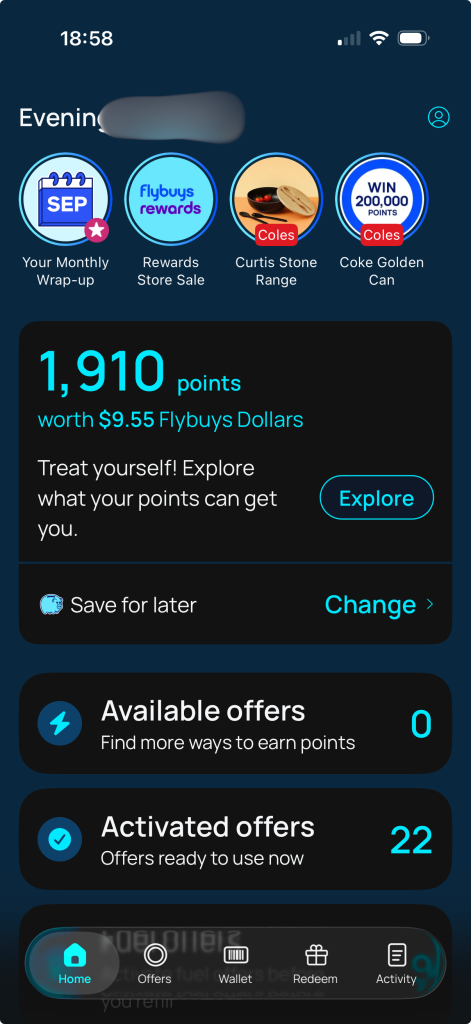
2. Save Rewards for the Christmas Grocery Shop
Instead of using every reward as soon as it becomes available, we like to save our rewards for the end of the year.
With Flybuys, we convert points into Flybuys Dollars and build up the balance over time. We then use it towards our Christmas grocery shopping in December, when food, entertaining and other seasonal expenses can add up.
Every 2,000 Flybuys points converts to $10 in Flybuys Dollars. Everyday Rewards also offers ways to save eligible rewards for a later shop, depending on your selected reward settings.
It won’t cover every Christmas expense, but having a balance ready to use makes one of the year’s bigger shopping trips easier to manage.
Our tip: Check your reward settings before the end of the year so you know whether your points are being saved or automatically converted into shopping rewards.
3. Consider OnePass if You Regularly Shop at Kmart, Target, Bunnings or Officeworks
OnePass can be useful for households that regularly shop at participating Wesfarmers retailers. Its annual plan is listed at $40 after any applicable trial, while the monthly option is $4 per month.
Benefits include free delivery on eligible items or orders and five times the standard Flybuys points at Kmart, Target, Bunnings Warehouse and Officeworks, subject to the program’s terms and exclusions.
For example, if you frequently order household essentials from Kmart or buy supplies for home and garden projects at Bunnings, the delivery savings and extra points may help offset the membership fee.
However, it isn’t automatically worthwhile for everyone. If you only shop at these stores occasionally, you may be better off paying delivery fees when needed rather than subscribing.
Our tip: Before joining, look at your recent purchases and estimate how much you could realistically save over a year. Base the decision on shopping you would do anyway.
Electricity
4. Compare Electricity Plans, but Don’t Switch Without Checking the Numbers
Energy plans can change, so it’s worth reviewing your current rates and comparing available offers from time to time.
We have been with AGL for more than 10 years and have been comfortable with the service and rates we’ve received. That doesn’t necessarily mean our plan will always be the cheapest, so we still believe it’s worth checking the alternatives.
For households in Queensland, New South Wales, South Australia, Tasmania and the Australian Capital Territory, the Australian Government’s Energy Made Easy website provides a free, independent way to compare electricity plans.
When comparing plans, look beyond the headline discount. Check the usage rates, daily supply charge, any time-of-use rates, solar feed-in tariff and conditions that apply to the offer.
Our tip: Compare plans using your actual electricity usage where possible. A lower advertised rate doesn’t always translate into a lower bill for your household.
5. Make the Most of Your Solar Power at Home
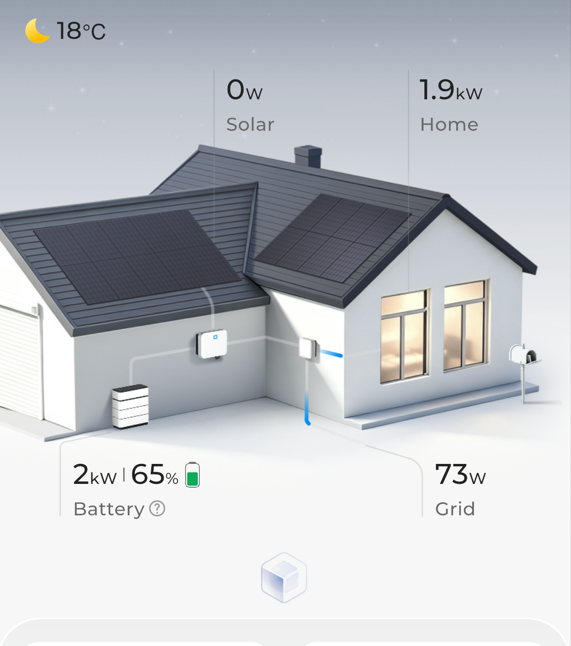
Our home has solar panels and a battery, which help us reduce the amount of electricity we need to buy from the grid.
Solar feed-in tariffs have changed over time. In our experience, the rate we once received was around 15 cents per kilowatt-hour, while the rate we now receive is around 4 cents. These are our own rates, not a figure that applies to every Australian household.
With a lower feed-in tariff, using more of the solar power we generate at home can be more valuable than exporting it. We aim to use electricity during sunny hours where practical, charge the home battery during the day and use stored energy later when solar generation falls.
The actual savings depend on your electricity plan, solar system, battery capacity, household usage and installation costs. A battery can be a significant upfront investment, so it’s important to calculate the likely payback rather than assuming every household will benefit financially.
Our tip: If you already have solar, check your monitoring app to see when you generate, use and export electricity. Shifting suitable appliances to sunny periods may help you use more of your own power without buying additional equipment.
Fuel
6. Check PetrolSpy Before Filling Up
Fuel prices can vary significantly between nearby service stations, so checking prices before filling up can be worthwhile.
We use PetrolSpy to compare prices around us and identify stations offering better value for the fuel our car needs. Rather than automatically visiting the closest station, we check whether another option nearby is cheaper.
The important thing is to consider the whole trip. Driving a long distance to save a few cents per litre may not be worthwhile once you account for the extra fuel and time.
Our tip: Check prices shortly before you leave, and compare stations along your normal route. Fuel prices can change, so treat app listings as a guide and confirm the price at the pump.
7. Use 7-Eleven Fuel Lock When the Price Makes Sense
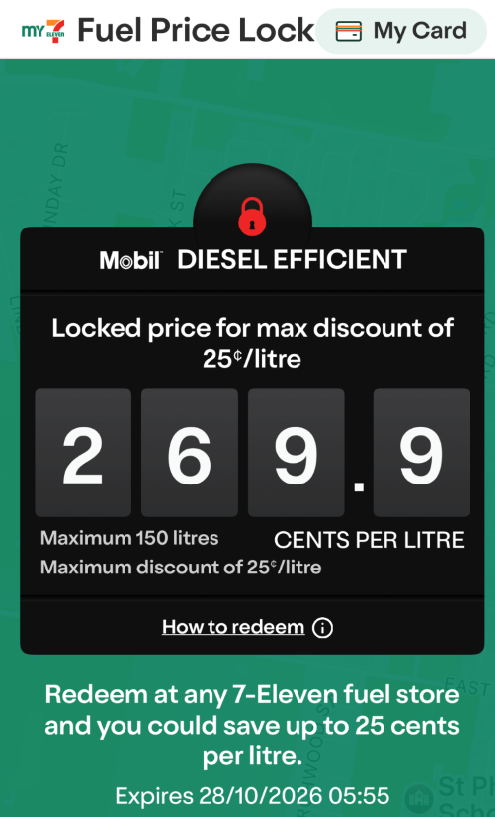
The My 7-Eleven app offers a Fuel Price Lock feature that can be useful when fuel prices are rising.
The app lets you lock in an eligible local price for your selected fuel type for up to seven days. The lock can be redeemed in one transaction for up to 150 litres, subject to the program’s terms. The maximum discount is capped at 25 cents per litre.
If the pump price later rises, your locked price may help you avoid paying the higher amount. If the pump price is lower than your locked price when you fill up, you pay the lower pump price instead.
One important detail is that the app’s best local price is based on the information recorded by 7-Eleven’s systems, not necessarily a live comparison of every fuel retailer. It doesn’t replace checking prices at other stations.
Our tip: Compare the available Fuel Lock price with nearby alternatives before activating it. Once activated, a lock generally can’t be cancelled, so choose the fuel type and price carefully.
Quick Checklist: Seven Ways to Manage Household Expenses
| Expense | What we do | Potential benefit |
|---|---|---|
| Groceries | Activate relevant Flybuys and Everyday Rewards offers | Earn rewards on planned purchases |
| Christmas shopping | Save eligible rewards for December | Reduce the cost of the seasonal grocery shop |
| Retail shopping | Compare OnePass benefits with our normal shopping habits | Potential delivery savings and extra points |
| Electricity plan | Compare rates and conditions periodically | Identify a better-value plan if one is available |
| Solar power | Use more of our own generation where practical | Reduce electricity bought from the grid |
| Petrol | Compare nearby prices with PetrolSpy | Avoid unnecessarily expensive fill-ups |
| Fuel pricing | Compare and use 7-Eleven Fuel Lock when suitable | Potentially protect against a price increase |
Conclusion
Managing the cost of living in Australia doesn’t always require major sacrifices. For our family, checking rewards offers, saving points for Christmas, reviewing subscriptions, making better use of solar power and comparing fuel prices are practical habits that fit into everyday life.
The savings will vary depending on where you live, your household’s needs and the offers available. The important thing is to focus on expenses you already have, compare the real costs and avoid spending more simply to earn rewards.
Small savings may not seem significant on their own, but consistently making informed choices can help keep a family budget under control over time.
Leave a Reply