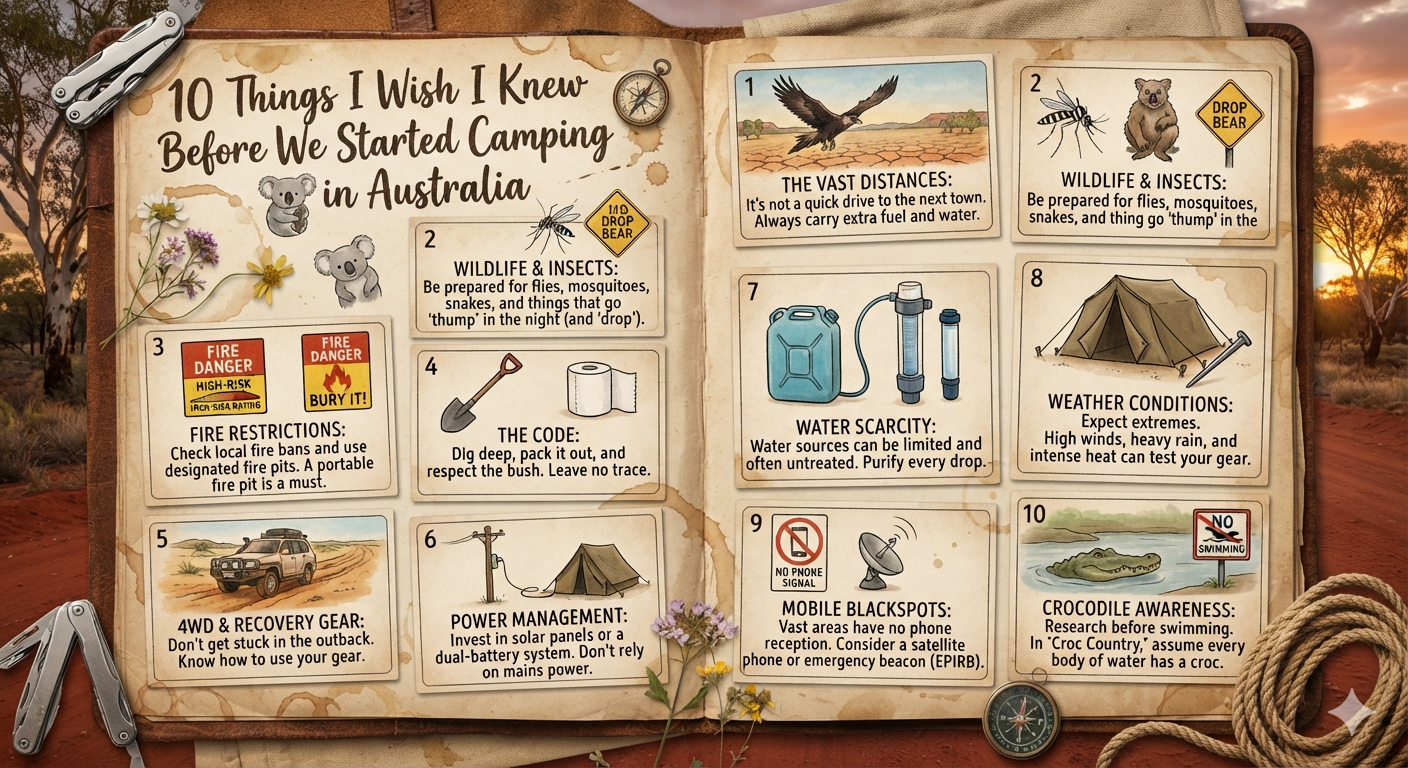
Camping in Australia is one of the best ways to experience the country’s incredible landscapes, from coastal national parks to peaceful bushland.
But when my family and I first started camping, we quickly discovered that camping in Australia comes with its own learning curve.
The weather can change quickly, mobile reception can disappear without warning, and local wildlife can be surprisingly determined to get into your food!
After a number of family camping trips, I have learned a lot of things that I wish someone had told me before our first trip.
Here are 10 practical lessons that can make your Australian camping trips easier, safer, and more enjoyable.
1. Book Your Campsite Early and Check the Site Carefully
From our experience, popular campgrounds like Wood Head can book out well in advance, especially during busy holiday periods.
When booking, don’t just look at the campsite name. If a campground map is available, take some time to check the actual site location.
Think about:
- How much shade the site gets
- How close it is to toilets and other facilities
- Whether the site is relatively flat
- How much privacy you have from neighboring campers
- Where your car and tent will be positioned
Also think about power before you book.
A powered site can make camping much easier if you’re using equipment such as a portable fridge, lights, or other electrical devices. If you choose an unpowered site, make sure you have enough battery capacity or a suitable portable power solution for your needs.
A little planning before booking can make a big difference once you arrive.
2. Be Ready for Dramatic Weather Changes
Australian weather can be unpredictable.
A beautiful sunny afternoon can turn into a cold night, strong wind, or sudden rain surprisingly quickly, particularly in coastal areas.
Don’t rely only on the weather you see when you leave home.
Before your trip, check the forecast for the actual camping location and prepare for conditions to change.
I recommend bringing:
- Waterproof and windproof gear
- Warm layers, even during warmer months
- Extra blankets or sleeping bags
- Appropriate rain protection for your tent
- A way to keep important belongings dry
One of the biggest mistakes a new camper can make is preparing only for the weather they expect rather than the weather they might get.
3. Start Simple: Borrow Gear Before You Buy
When you first get into camping, it’s very easy to get carried away.
Suddenly you need a huge tent, camping chairs, portable fridge, cooking equipment, lanterns, tables, power stations and dozens of other accessories.
Before you know it, you’ve spent thousands of dollars.
My advice?
Start simple.
If you have friends or family who already camp, ask if you can borrow some equipment for your first few trips.
Try borrowing things such as:
- A tent
- Camping chairs
- Lanterns
- Headlamps
- Cooking equipment
- Sleeping mats
After a few trips, you’ll have a much better idea of what you actually need.
Pro Tip
Don’t buy expensive camping gear just because someone says it’s essential.
Your camping style may be completely different from theirs.
Try before you buy whenever possible.
4. Don’t Underestimate Water and Campground Facilities
Water is one of those things that you don’t really appreciate until you run out.
Always check what facilities your campground provides before leaving home. Some campgrounds have drinking water, while others may have limited water facilities or require you to bring your own supply.
Think about both drinking water and utility water for things such as cooking and washing.
And when using shared facilities, remember that you’re not the only person relying on them.
For example, when washing dishes, don’t leave the tap running unnecessarily.
It might seem like a small thing, but water can be a limited resource at some campgrounds, particularly during dry periods.
Also make sure you understand how the campground handles waste and wastewater, and use designated disposal facilities where required.
5. Protect Your Food from Australian Wildlife
This is one lesson I learned very quickly.
Australian wildlife may look cute, but they can be extremely determined when food is involved.
Kangaroos and possums can get surprisingly close to campsites, but one of the biggest campsite troublemakers can be the humble Australian Bush Turkey.
These birds are not afraid of people.
They will happily investigate your campsite looking for anything edible.
And they don’t always wait until breakfast.
I’ve had them wandering around the campsite early in the morning, making enough noise to wake people up while investigating anything they think might contain food.
Keep Food Secure
Don’t leave food, rubbish, or food containers lying around your campsite overnight.
Keep food securely stored according to the campground’s wildlife and food-storage rules. A vehicle or properly sealed storage container is generally a much better option than leaving food beside your tent.
The same applies to rubbish.
If wildlife can smell it, assume they can find it.
6. Understand Fire Bans and Firewood Rules
A campfire can be one of the best parts of camping in Australia.
There’s something special about sitting around a fire with your family after dinner.
But campfires also come with serious responsibilities.
Before lighting a fire, always check the current fire danger, fire ban status, and campground-specific rules for the area you’re visiting.
Rules can vary between states, parks, and campgrounds.
The same applies to firewood.
Don’t assume that you can simply collect fallen branches from around the campground. Many parks restrict or prohibit collecting firewood because fallen timber is also an important part of the local ecosystem.
If fires are permitted, check what type of firewood is allowed and whether you need to bring your own.
Never assume that a campfire is allowed just because there is a fire pit at the campsite.
7. Download Offline Maps Before You Lose Mobile Reception
This is something I strongly recommend for anyone camping in remote areas.
Mobile reception can disappear surprisingly quickly once you leave populated areas.
Don’t wait until you have no signal to figure out where you’re going.
Before leaving home:
- Download offline maps
- Save the campground location
- Save important routes
- Check the driving directions
- Make sure you know where nearby fuel stations and shops are
Apps such as WikiCamps can also be useful when researching campgrounds and planning your trip.
Having an offline map available can make a big difference when your phone suddenly shows “No Service.”
8. Prepare for Bugs, First Aid and Water Hazards
Camping means spending a lot more time outdoors, so expect insects.
Mosquitoes, flies, sand flies and other bugs can quickly turn a relaxing evening into an uncomfortable one.
Bring suitable insect repellent and consider other protection such as long sleeves and appropriate clothing.
A properly stocked first-aid kit is also essential.
It should be suitable for the activities you’re planning and include basic supplies for things such as cuts, blisters, minor burns and insect bites.
Don’t Forget Water Safety
If you’re camping near beaches, rivers, or rocky areas, take extra care around the water.
Rocks can be extremely slippery, and some coastal areas can have sharp shells, oysters or other hazards.
If you’re camping with children, appropriate water shoes can provide useful protection for their feet.
Most importantly, don’t assume that calm-looking water is automatically safe.
Check local conditions and follow any warning signs or safety advice.
9. Respect the Campground and Your Neighbours
A good campsite isn’t just about looking after your own family.
You’re sharing the area with other campers.
Most campgrounds have quiet hours, and even when they don’t, common sense should apply.
Avoid:
- Loud music late at night
- Shouting across campsites
- Leaving rubbish behind
- Taking over shared facilities
- Letting children run through other people’s campsites
- Leaving food or waste where wildlife can access it
And remember to leave your campsite clean.
The goal is simple:
Leave the campsite as you found it — or better.
Respecting the environment also protects the experience for the people who come after you.
10. Don’t Stress About Creating the Perfect Campsite
This might be the most important lesson I’ve learned.
When you start camping, it’s easy to become obsessed with getting everything right.
You want the perfect tent setup.
The perfect cooking area.
The perfect lighting.
The perfect camping chairs.
The perfect organisation.
And then, after spending two hours setting everything up, you realise you’re exhausted!
Over time, I’ve learned that camping isn’t really about creating the perfect campsite.
It’s about spending time together.
Go for a walk.
Watch the sunset.
Sit around the campfire.
Explore the local area.
Let the kids get dirty.
And when something goes wrong — because something eventually will — laugh about it.
Those little mistakes often become the stories you remember years later.
Final Thoughts
Our first camping trips weren’t perfect.
We forgot things, bought equipment we didn’t really need, dealt with unpredictable weather, and learned very quickly that Australian wildlife doesn’t always respect the boundaries of your campsite.
But that’s also what made camping fun.
Every trip taught us something new.
If you’re planning your first family camping trip in Australia, you don’t need to know everything before you leave.
Start small, prepare for the basics, check the local rules, protect your food, and most importantly, don’t let the pursuit of the perfect camping setup take away from the experience itself.
The best part of camping isn’t the gear.
It’s the memories you make with the people you’re with.
Leave a Reply