Introduction
Exploring Australia’s beautiful coastal tracks and driving along sandy beaches in a Toyota LandCruiser Prado 150 can be one of the highlights of family camping.
However, beach driving requires preparation, the right technique, and respect for changing conditions. Soft sand, incorrect tyre pressures, incoming tides, and poor recovery planning can quickly turn a relaxing trip into a stressful situation.
From our family trips around Queensland, including beach-driving destinations such as Bribie Island, I’ve learned that preparation is just as important as having a capable 4WD.
In this guide, I’ll share practical sand-driving tips, what to consider when adjusting tyre pressures, and the essential recovery gear worth carrying in your Prado 150.
Whether you’re planning your first beach trip or looking to improve your setup, these are the basics I’d consider before driving onto the sand.
1. The Golden Rule of Sand Driving: Managing Tyre Pressure
One of the most important techniques for driving on soft sand is adjusting tyre pressure to increase the tyre’s contact area and improve flotation and traction.
A tyre that is too hard may dig into soft sand more easily. Reducing pressure can help the vehicle travel across the surface, but it also changes how the tyre behaves and how safely it can be driven.
Is 15 PSI a good starting point?
On our beach trips, we have typically reduced our tyre pressures to around 15 PSI.
This is our personal experience, not a universal recommendation for every 4WD or beach condition. The appropriate pressure depends on factors such as vehicle weight, tyre construction, sand softness, and the terrain.
Before your trip, check the tyre manufacturer’s guidance and your vehicle’s recommendations. If you are inexperienced with sand driving, seek advice from an experienced 4WD instructor or local specialist.
At reduced pressures, tyres are more vulnerable to damage or coming off the rim, particularly during sharp turns, sudden braking, or driving too quickly. Lower pressure is not permission to drive faster.
Where should you lower your tyre pressure?
Before entering a beach, look for a designated or suitable firm area where you can safely pull over without blocking traffic.
Many beach access points have nearby areas where drivers prepare their vehicles. However, facilities vary, so check your destination beforehand rather than assuming an air-down area will always be available.
Before leaving home, make sure your tyre-pressure gauge and air compressor are working correctly.
Don’t forget to reinflate before returning to normal roads
After beach driving, reinflate your tyres to the appropriate road pressures before travelling at normal road speeds on sealed roads.
A portable air compressor and reliable tyre-pressure gauge are essential parts of our preparation.
When using an electric compressor, follow the manufacturer’s instructions for connecting it to the vehicle’s power supply. If the compressor requires the engine to be running, make sure the vehicle is outdoors in a well-ventilated area, away from people and other hazards.
Don’t leave the beach access area until your tyres have been returned to suitable pressures for the next part of your journey.
2. Choosing the Right Route and Driving Technique
Drive on firmer sand where permitted
On many Queensland beaches, the firmer sand is generally found between the waterline and the high-tide mark.
However, the best route changes with tides, waves, weather, and beach conditions. Always assess the actual conditions rather than assuming the sand will be firm.
Avoid driving through seawater, deep washouts, or areas where waves could reach your vehicle. Never drive onto dunes or vegetation to bypass soft sand or avoid the tide.
Before setting off, check tide times, weather forecasts, local beach conditions, access restrictions, and any required vehicle permits.
For official guidance, see the Queensland Government’s Driving on sand safety advice.
Avoid deep ruts and sudden steering movements
Deep wheel ruts can make steering difficult and increase the risk of the vehicle becoming stuck.
Choose a suitable line through the sand, keep your movements smooth, and avoid sudden acceleration, sharp turns, and harsh braking.
If the vehicle begins losing momentum, spinning the wheels aggressively can dig it deeper into the sand. Stop and reassess rather than continuing to accelerate.
The right approach depends on the conditions, so learn appropriate sand-driving techniques before tackling difficult tracks.
Stay alert around pedestrians and wildlife
Beach driving areas are shared spaces, not private 4WD tracks.
The sound of surf and strong winds can make it difficult for pedestrians to hear approaching vehicles. Children may also move unpredictably near the water.
Drive slowly, maintain plenty of space around people, and be prepared to stop. Watch for wildlife, shorebirds, other vehicles, and any marked restrictions.
Always follow posted speed limits and Queensland road rules. Keep everyone inside the vehicle with seatbelts fastened while it is moving.
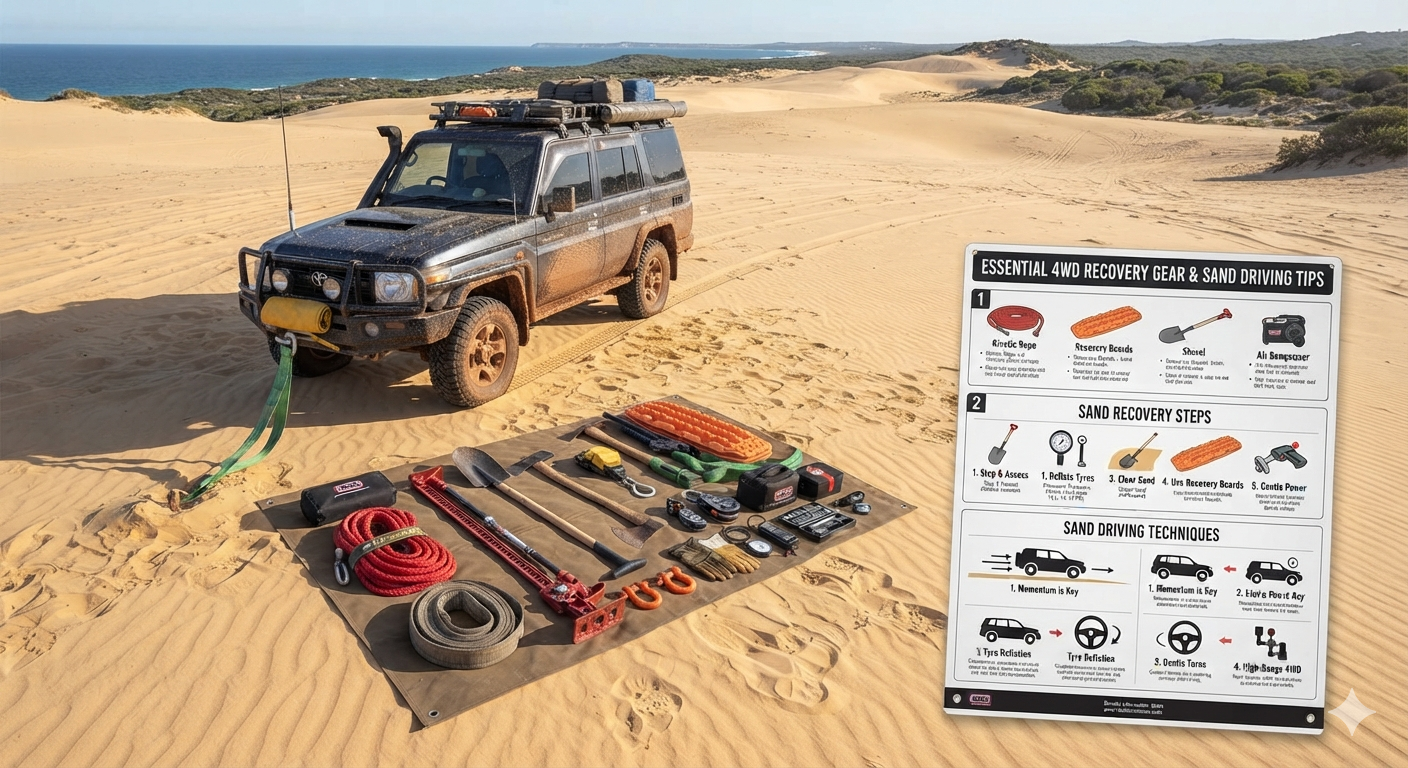
3. Essential 4WD Recovery Gear for Beach Driving
Even an experienced driver can become bogged in soft sand. Carrying suitable equipment can make a recovery easier, but it is equally important to understand how to use it safely.
Here are the main items I’d consider for a Prado 150 beach setup.
1. Traction boards
Traction boards, such as MaxTrax, can provide a surface for the tyres to grip when the vehicle becomes stuck in sand.
They are useful because they may allow you to recover without another vehicle, provided the situation is suitable and you can work safely.
Before using them, clear loose sand from around the tyres and follow the board manufacturer’s instructions. Position the boards carefully, and make sure everyone stays clear of the vehicle’s path.
After recovery, clean the boards and secure them properly before continuing your journey.
2. Portable air compressor and tyre-pressure gauge
These are essential for anyone who regularly drives on sand.
The gauge lets you monitor tyre pressure accurately, while the compressor allows you to reinflate the tyres before returning to normal road speeds.
Choose equipment suitable for your tyre size and intended use. Check that the compressor, hoses, connectors, and gauge are working before leaving home.
3. A long-handled shovel
A sturdy shovel is one of the simplest and most useful recovery tools.
If your Prado becomes bogged, you may need to remove sand from around the tyres or clear space underneath the vehicle before attempting to move again.
Use it to create a clear path and make room for traction boards when appropriate. Avoid digging beneath an unsupported vehicle or placing yourself where the vehicle could move onto you.
4. Rated recovery equipment
A suitable recovery strap and compatible, correctly rated recovery points may be useful when a vehicle-to-vehicle recovery is necessary.
However, snatch recovery is not a simple towing exercise. The stored energy in a stretched recovery strap can cause severe injury or death if equipment fails or the recovery is performed incorrectly.
Only use equipment designed and rated for the specific recovery method. Never attach a recovery strap to an ordinary tie-down point, tow ball, or an unapproved component.
Use compatible equipment according to the manufacturers’ instructions, keep bystanders well clear, and obtain proper training before attempting a snatch recovery.
When conditions allow, try lower-risk methods such as clearing sand and using traction boards before considering a dynamic recovery. If the situation is unsafe, stop and seek qualified assistance.
5. Communication and emergency supplies
Beach trips can take you away from mobile coverage and nearby assistance.
For remote trips, consider carrying:
- A suitable UHF radio or other reliable communication device.
- Adequate drinking water and food.
- A first-aid kit.
- A torch and basic emergency supplies.
- Essential vehicle spares and tools.
- Offline maps and details of your intended route.
Where practical, travelling with another capable 4WD provides an additional layer of support if one vehicle becomes stuck or develops a mechanical problem.
Tell someone where you’re going and when you expect to return. Check local emergency arrangements before travelling into remote areas.
4. Our Prado 150 Setup and Preparation
Our Toyota Prado 150 is part of our family camping setup, so preparation involves more than simply checking the tyres.
We also need to consider passengers, camping equipment, vehicle load, and the route we’re planning to take.
When loading the vehicle, keep heavy items low and secure them properly. Avoid overloading roof racks, as a high centre of gravity can affect vehicle stability.
Before leaving, I recommend checking:
- Tyre condition and pressures.
- The operation of the 4WD system.
- Recovery equipment and the air compressor.
- Fuel range and planned travel distance.
- Weather, tide times, and beach access conditions.
- Vehicle access permits and track restrictions.
- Drinking water, communication equipment, and emergency supplies.
If you’re building your own family setup, you may also find these related articles useful:
- [Practical 4WD & Camping Setup for Toyota Prado 150] — our family camping equipment and roof-rack setup.
- [Toyota Prado 150 Running Costs: What We Actually Spend in Australia] — our experience with the ongoing costs of owning a Prado 150.
These two articles cover the broader vehicle and camping setup, while this guide focuses on preparing for beach driving.
5. Before You Drive on Bribie Island
Bribie Island is a popular Queensland destination, but access requirements and beach conditions need to be checked before every trip.
Before leaving, confirm:
- Vehicle suitability: Check that your vehicle meets the requirements for the intended area.
- Access permits: Purchase any required vehicle access permit before entering the designated recreation area.
- Tides and weather: Plan around suitable conditions and avoid driving when water, waves, or washouts create a hazard.
- Tyre pressures: Adjust pressures appropriately for the terrain and remain within the tyre manufacturer’s specifications.
- Recovery equipment: Carry a working air compressor, tyre-pressure gauge, shovel, traction boards, and other suitable equipment.
- Route and closures: Check official park alerts, permitted tracks, and current access information.
Bribie Island’s rules and conditions can change, so don’t rely solely on an old trip report or advice from social media.
Check the official Bribie Island National Park and Recreation Area information before your trip.
Conclusion
Beach driving with a Toyota Prado 150 can open up some fantastic opportunities to explore Australia’s coastal landscapes and camping destinations.
However, a capable 4WD is only part of the equation. Preparation, appropriate tyre pressures, careful route selection, and suitable recovery equipment all matter.
For our setup, a tyre-pressure gauge, portable air compressor, traction boards, and shovel are key items to consider. More specialised recovery equipment can also have a place, but only when the driver understands its limitations and how to use it safely.
My biggest advice is simple: prepare before you reach the beach, drive to the conditions, and never take unnecessary risks to get through a difficult section.
A successful beach trip isn’t about conquering every track. It’s about getting there safely, enjoying the experience, and bringing everyone home.
References & Further Reading
- Queensland Parks and Forests: Driving on Sand
- Queensland Parks and Forests: Four-Wheel Driving with Care
- Queensland Government: Vehicle Access Permits
- Bribie Island National Park and Recreation Area: Official Visitor Information
Disclaimer: This article reflects our personal camping and 4WD interests and is intended for general information only. Sand-driving conditions, vehicle requirements, tyre recommendations, and access rules vary. Always follow the vehicle and tyre manufacturers’ instructions, check current official guidance, and seek qualified training before attempting vehicle recovery. Off-road driving and recovery activities can cause serious injury, vehicle damage, or environmental harm if performed incorrectly.
Leave a Reply