Introduction
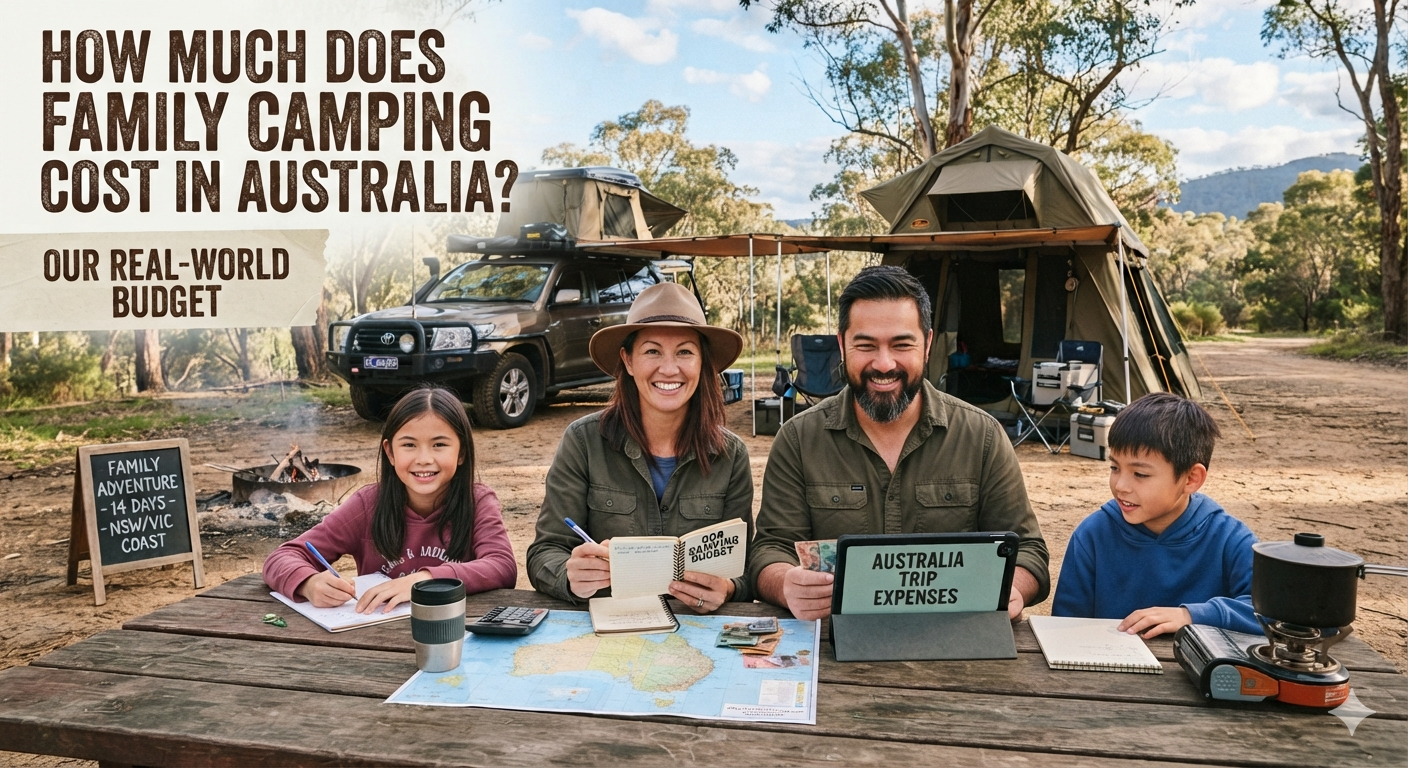
There is nothing quite like packing up our Toyota Prado, heading to a coastal campground, and setting up camp under the stars with the family. However, if you are planning your first family camping trip in Australia, you might be wondering: How much does family camping actually cost?
Camping is often seen as a budget-friendly way to travel, but campground fees, camping gear, fuel, and food can add up quickly. The total cost depends on where you stay, how much equipment you already own, and how you prefer to travel.
Based on our family’s camping experiences at places such as Woody Head in NSW and BIG4 Sandstone Point Holiday Resort in Queensland, I’ll share some of our actual accommodation and gear costs, along with practical ways to plan a camping budget.
Our family consists of two adults, one school-aged child, and one toddler. The prices below are in Australian dollars (AUD). Some are amounts we actually paid several years ago, so they should be treated as examples rather than current retail prices.
1. Campground Fees: National Parks vs Holiday Parks
One of the biggest differences in camping costs is the type of campground you choose.
Some national park campgrounds offer a more basic camping experience, while holiday parks may provide powered sites, swimming pools, playgrounds, and additional family facilities.
Woody Head Campground, NSW
Woody Head, located in Bundjalung National Park on the NSW North Coast, is one of our favourite family camping destinations.
For our family, a two-night stay at Woody Head cost approximately $104.55 for the campsite booking. This is the amount we paid, not a guaranteed current rate. Prices can vary depending on the dates, site, and number of people booked.
National park camping can be a good option for families who enjoy the outdoors and do not need resort-style facilities.
However, remember that camping fees and vehicle entry fees are separate. NSW National Parks lists a vehicle entry fee of $8 per day at Woody Head. Eligible annual park passes can cover this entry fee, but they do not cover camping accommodation.
If you visit NSW national parks regularly, an annual pass may be worth considering:
- Multi Parks Pass: $65 for one year, covering eligible fee-charging parks except Kosciuszko National Park.
- All Parks Pass: $190 for one year, covering eligible fee-charging parks, including Kosciuszko National Park.
These are the published prices at the time of writing. Check the official website for current prices, eligible parks, and conditions before purchasing a pass.
Official information: Woody Head Campground and NSW National Parks Annual Passes.
BIG4 Sandstone Point Holiday Resort, QLD
Our experience at BIG4 Sandstone Point Holiday Resort was quite different.
For a three-night, four-day stay, we spent approximately $550 on accommodation. This was our actual cost for that particular trip, rather than a standard rate for all bookings.
Holiday parks can cost more than basic national park campgrounds, but the extra facilities can make a difference when travelling with children. Depending on the park, you may have access to swimming pools, water play areas, playgrounds, and other family-friendly amenities.
When comparing prices, check whether you are booking a powered or unpowered site and whether the rate changes during school holidays, weekends, or peak seasons.
Also look for promotions and multi-night deals, but compare the total booking price rather than assuming a discount automatically makes a stay cheaper.
For us, the choice comes down to the kind of holiday we want. We enjoy the natural surroundings at Woody Head, while a holiday park such as Sandstone Point offers a different experience for the family.
2. Initial Camping Gear: What We Actually Paid
The initial cost of camping equipment can be one of the biggest expenses, especially when you are starting from scratch.
We gradually built our family camping setup over time. The following are prices we actually paid for some of our equipment several years ago. They are historical purchase prices, not current retail estimates.
| Item | Our purchase price |
|---|---|
| Coleman Instant Up 8-Person Tent | $650 |
| Foldable camping chairs from Amazon | Approximately $50 each |
| Folding camp table from Costco | $99 |
| Inflatable air mattress from Costco | $79 |
| Self-inflating mattress from Anaconda | $129 |
These purchases alone added up to a significant initial investment, even before buying cooking equipment, lighting, storage containers, and other camping essentials.
Prices and product ranges change over time, so use these figures as a reference for our own experience rather than a guide to what the same products cost today.
My advice: Buy the essentials first
You do not need to purchase every piece of camping equipment before your first trip.
Start with the essentials: somewhere to sleep, suitable bedding, basic cooking equipment, lighting, chairs, and a way to store food safely.
If possible, borrow equipment from friends or take a short trip with the gear you already have. This gives you an opportunity to work out what your family actually needs before spending more money.
For example, a portable fridge, dual-battery system, roof platform, and other 4WD upgrades can be useful for some camping styles, but they are not essential purchases for every beginner.
The best camping setup is one that suits your family and the trips you actually take, rather than the most expensive setup you can buy.
3. Food, Groceries and Meal Planning
Food is another expense worth planning before leaving home.
When we go camping, we usually plan our meals in advance and buy groceries before the trip. Preparing breakfast, lunch, and dinner at the campsite can help us manage costs and avoid unnecessary stops at shops.
However, camping is also a holiday. We sometimes enjoy eating out at a local restaurant or pub, particularly when there is somewhere nice to eat near the beach.
The important thing is to decide how much you want to spend before you leave.
Here are a few practical ways to manage food expenses:
- Plan your meals: Write down what the family will eat each day and buy the ingredients in advance.
- Prepare easy meals: Choose meals that are simple to cook at the campsite, especially after a long drive.
- Bring snacks and drinks: Having these ready can reduce unplanned purchases during the trip.
- Allow for eating out: If you want to visit a local restaurant, include it in your budget rather than treating it as an unexpected expense.
- Plan your food storage: An esky requires ice and may need replenishing during the trip. A portable fridge has a different upfront cost and power requirement.
Ice costs will depend on how much you need, the weather, and the length of your trip. If you use an esky, allow for this as a separate expense.
We do not use a single food budget for every trip because the cost depends on the length of the stay and how often we eat out. Planning the meals in advance helps us make those decisions before leaving home.
4. Fuel and Vehicle Costs for a Toyota Prado 150
When travelling in a Toyota Prado 150 with camping equipment, fuel is another cost to consider.
Your fuel expenses will depend on the distance travelled, fuel prices, vehicle load, driving conditions, and whether you spend time on sandy or off-road tracks.
Before leaving, I recommend estimating the return-trip distance and allowing extra room in your budget for detours or local driving.
There are also a few vehicle-related expenses worth remembering:
- Fuel for the return journey and local sightseeing.
- Vehicle checks before a longer trip.
- Cleaning the vehicle after driving on beaches or near saltwater.
- Maintenance and wear associated with regular travel and 4WD use.
If you plan to drive on beaches, check local access requirements, permits, tide conditions, and recommended tyre pressures before your trip.
For a more detailed look at our vehicle expenses, see my related article, Toyota Prado 150 Running Costs: What We Actually Spend in Australia. You can link this title to the relevant post on AussieKim.com.
One important point: fuel, maintenance, and vehicle upgrades are different costs. A roof platform or other 4WD accessory may be a one-off purchase, while fuel and maintenance are ongoing expenses. Keeping these categories separate makes it easier to understand what each camping trip actually costs.
5. How to Calculate Your Family Camping Budget
Rather than relying on one average figure, I find it more useful to divide camping expenses into categories.
Use the following checklist when planning your next trip.
Before the trip
- Campground booking
- Any applicable national park vehicle entry fee
- New camping gear or replacement equipment
- Fuel estimate for the return journey
- Groceries and planned meals
- Ice or other food-storage supplies
- Planned restaurant meals and activities
- A small contingency for unexpected expenses
The biggest distinction is between initial setup costs and the cost of an individual trip.
If you buy a tent for $650, that is a significant initial expense. However, you do not need to buy another tent every time you go camping. Over several trips, the initial equipment cost can be spread across multiple holidays.
For a more useful comparison, keep a record of your actual spending after each trip. You will gradually develop a realistic budget based on your own family, vehicle, and camping preferences.
Conclusion
Family camping in Australia can be a relatively affordable way to spend time together, but the total cost depends on your choices.
Our experience shows the difference between a national park campsite such as Woody Head and a holiday park such as BIG4 Sandstone Point. We have also learned that camping equipment can require a substantial initial investment, while meal planning and sensible purchasing decisions can help control future expenses.
My advice is to start with the equipment you genuinely need, compare campground prices before booking, plan your meals, and estimate fuel costs based on your actual route.
You do not have to build a fully equipped 4WD camping setup from day one. Start with a manageable budget, learn what works for your family, and upgrade your equipment gradually as your camping experience grows.
For us, the best part of camping is spending time together outdoors. With a little planning, you can make those experiences more manageable without spending money on equipment or facilities you do not really need.
Leave a Reply