Introduction
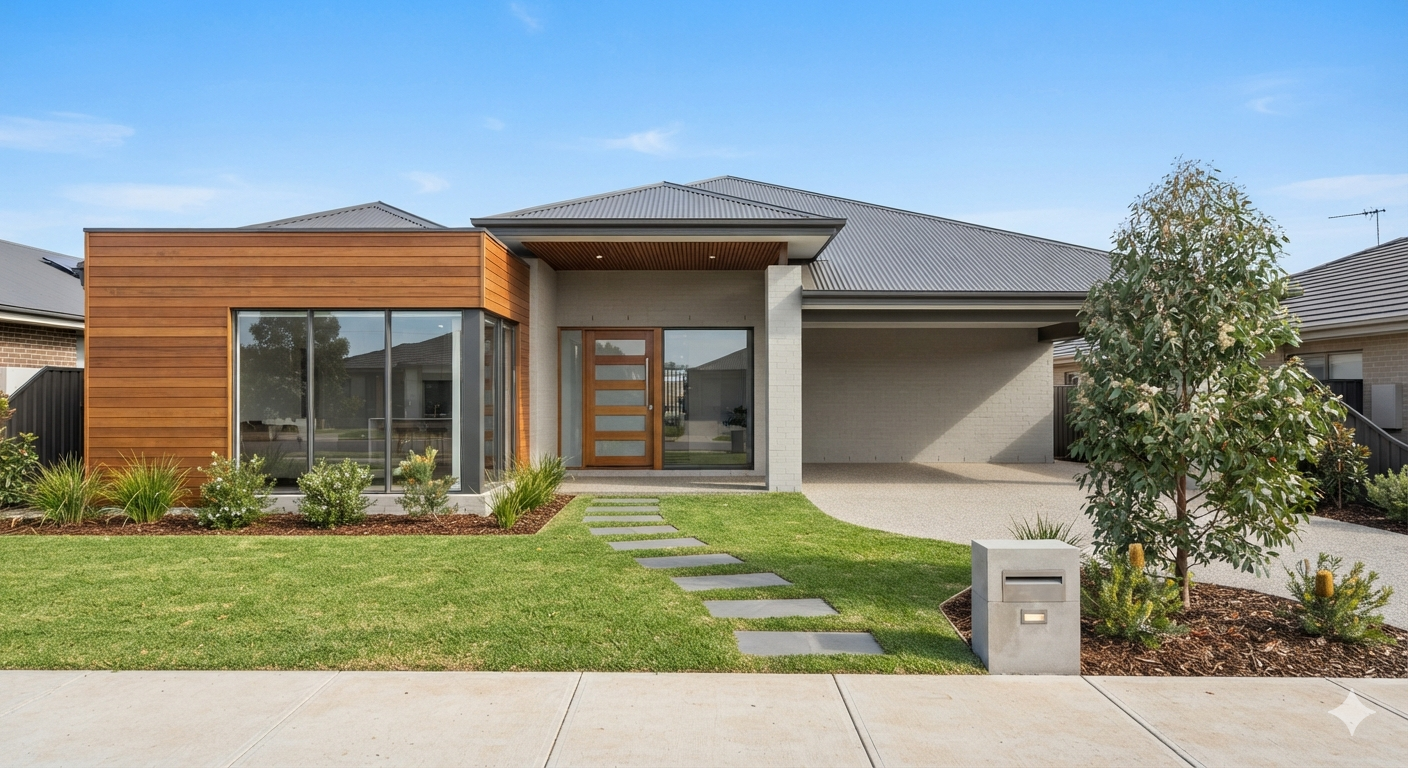
Receiving the keys to our new home was a massive relief, but stepping inside revealed a completely different challenge: the house was finished, but the home wasn’t.
We had no window coverings, no air conditioning for the Queensland summer, a bare boundary, and a backyard that was essentially a pile of clay.
Rather than paying for every job through turnkey packages or expensive post-build services, we decided to take a more hands-on approach.
Over the following weeks and months, we measured our own windows, sourced blinds, purchased air-conditioning units during sales, found licensed tradies for installation, visited a turf farm in Tamborine Mountain, and coordinated fencing with our neighbours.
Here is what we learned from turning a newly handed-over house into a more comfortable and usable family home.
1. Handover Inspection: Look Carefully for Construction Debris
Before starting any DIY projects, there is one thing I wish every new-home buyer would pay close attention to: the condition of the land around the house at handover.
The inside of a new home can look perfect while the surrounding block still contains construction debris.
Things worth checking include:
- Timber offcuts
- Packaging and building materials
- Concrete or mortar spills
- Rocks and construction waste
- Excess soil
- Debris around the driveway and slab
- Areas that may later become gardens or lawns
Watch Out for Buried Concrete
One particular issue is leftover concrete.
During construction, excess concrete can sometimes end up around the site. If it is covered by soil, it may not become obvious until you start preparing the backyard.
A friend of mine discovered this the hard way.
After handover, they started levelling the soil for their lawn and discovered large pieces of buried concrete. Removing them required hiring heavy equipment from Kennards Hire, including a jackhammer/demolition drill, and spending many hours breaking the concrete apart.
That is not the kind of DIY landscaping project anyone wants.
Check Before You Start Landscaping
Before accepting handover, walk around the entire block and look carefully at areas that will eventually become:
- Lawn
- Garden beds
- Paths
- Fencing
- Driveways
- Outdoor entertaining areas
If you find significant construction debris or damage that appears to be the builder’s responsibility, raise it with the builder and document it with photos and written communication.
The exact handover process and your rights will depend on your contract and circumstances, so don’t rely solely on verbal promises.
For us, the lesson was simple:
Inspect the land before you cover it with soil, turf or landscaping.
2. Window Blinds: DIY Sourcing vs. “From” Prices
Once the keys were handed over, window coverings became one of our first priorities.
A new house with no blinds might look nice during the day, but privacy becomes an immediate issue once you start living there.
There are plenty of companies offering custom blinds, but I quickly discovered that advertised online prices can be quite different from the final price.
You might see advertisements saying:
“From $29”
But the “from” price usually applies to a very small or basic window.
Once you enter the actual dimensions and choose the required material, colour and style, the price can increase significantly.
Our Approach: Buy Off-the-Shelf Where Possible
Instead of ordering every blind as a custom product, I visited a local Curtain Wonderland store and looked at the available options in person.
Where the standard sizes worked with our windows, we used off-the-shelf products.
This allowed us to keep costs under control while still getting blinds that looked good and did the job.
Measure Carefully
If you’re comfortable doing basic measurements yourself, measuring the windows before shopping can save time and potentially reduce costs.
The main thing is to understand whether you need an inside mount or outside mount and measure the width and height according to the manufacturer’s instructions.
I recommend checking the specific measurement requirements for the product you are buying rather than assuming every blind uses exactly the same measurement method.
For a new home with many windows, even a relatively small saving per window can add up quickly.
3. Air Conditioning: Buy the Units on Sale, Then Find the Installer
Living in Queensland, air conditioning wasn’t really optional for us.
The house was handed over during a period when we knew summer temperatures would make the bedrooms and living areas uncomfortable without cooling.
Instead of purchasing an air-conditioning package directly through an installer, we separated the equipment purchase from the installation.
Buy the Units During a Sale
We watched for retail promotions and purchased our split-system air conditioners when the units were discounted.
This gave us more control over the brands and models we wanted rather than simply accepting whatever equipment was included in an installation quote.
Finding an Installer Through hipages
For installation, we used hipages to find local tradies and compare quotes.
We requested multiple quotes rather than accepting the first price we received.
This helped us compare:
- Installation cost
- Number of units
- Installation locations
- Pipe run requirements
- Electrical work
- Outdoor unit positioning
- Warranty and workmanship details
For electrical and refrigerant work, make sure you use appropriately licensed and qualified professionals and check the requirements that apply in your state.
Back-to-Back Installation Can Reduce Costs
One thing we learned during the quoting process was how much the installation layout can affect the price.
A back-to-back installation, where the indoor unit is mounted on the internal wall directly opposite or close to the outdoor unit, generally requires less pipework and labour.
If the indoor and outdoor units are far apart, the installation can require:
- Longer refrigerant pipe runs
- More electrical work
- Additional drainage
- More labour
- More complex installation
So when planning a new build, think about air-conditioning locations before the house is finished.
If you can plan the positions early, you may be able to reduce installation complexity later.
4. Landscaping & Turf: Buying Directly From a Turf Farm
After the house itself was sorted, the backyard became our next major project.
The backyard was basically bare clay, so we needed to prepare the soil before we could create a usable lawn.
I checked several options, including:
- Bunnings
- Local nurseries
- Landscaping suppliers
- Turf suppliers
The price per square metre varied considerably depending on the supplier and turf type.
For our yard, we eventually chose Empire Zoysia because we liked its appearance and believed it suited our requirements and Queensland conditions.
Visiting a Turf Farm
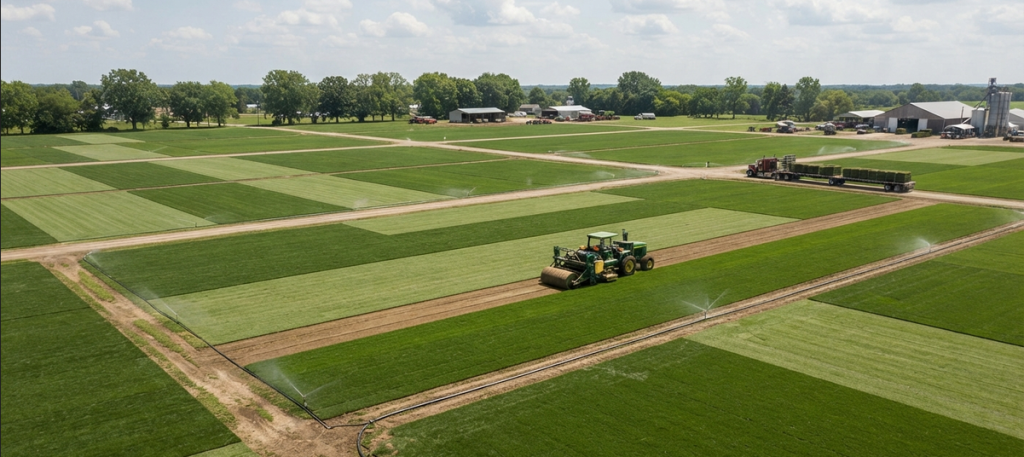
One of the most interesting parts of the process was finding a turf grower in Tamborine Mountain that sold directly to the public.
Rather than simply ordering turf online, we visited the farm.
The owner showed us around the different varieties and explained the characteristics of each type.
We were even encouraged to walk barefoot across the grass to compare the texture.
That was much more useful than looking at small samples in a shop.
It also gave us much more confidence in the variety we eventually selected.
Order Extra Turf
Because I planned to lay the turf myself, I measured the area carefully and ordered approximately 10% extra.
This allowance is useful for:
- Trimming around edges
- Curved sections
- Irregular corners
- Small measurement errors
- Damaged pieces
The exact amount of extra turf you need will depend on the shape of your yard.
A simple rectangular lawn may require less waste than a yard with lots of corners and obstacles.
Preparing the Ground
Before the turf arrived, we prepared the backyard by spreading a fresh layer of suitable topsoil and levelling the surface.
This preparation stage is extremely important.
Laying expensive turf over poorly prepared soil can create problems later, including uneven growth and drainage issues.
Once the turf arrived, we laid it as quickly as possible and followed the supplier’s watering recommendations.
For the first week, we were particularly careful about keeping the new turf adequately watered while it established.
5. Boundary Fencing & Side Gate
Another major post-handover project was the boundary fencing.
In a new residential development, fencing can become an interesting situation because your neighbour may be building at the same time.
Instead of immediately organising everything independently, we contacted our neighbour and discussed the options together.
Sharing the Fence Cost
Where applicable under Queensland’s Dividing Fences Act 1953, the cost of a sufficient dividing fence can generally be shared between adjoining owners.
However, the exact requirements and cost-sharing arrangements can depend on the circumstances, so it’s worth discussing the fence with your neighbour before committing to a contractor.
In our case, the neighbouring property was also under construction.
We obtained the neighbour’s builder contact information through our own builder, shared the fencing quotes, agreed on a suitable option, and ultimately split the cost 50/50.
This made the process much easier for both sides.
Adding a Side Gate
One thing I discovered is that a standard boundary fencing quote doesn’t necessarily include everything you want.
We also wanted a side pedestrian gate.
Because our estate was still under construction, I noticed a fencing contractor working on another nearby property.
I approached them and asked whether they could quote for our side gate while they were already working in the area.
Because they were already nearby, we were able to negotiate a reasonable local price.
This was a good reminder that sometimes the best way to find a tradie isn’t always through a large online search.
Look around your neighbourhood.
If you see a qualified contractor already doing similar work nearby, it may be worth asking whether they can quote for your project.
What I Learned After Building Our First Home
The biggest lesson from the post-handover stage was that building the house is only one part of the total project.
Once you receive the keys, there can still be a surprisingly long list of expenses and jobs.
For example:
- Blinds
- Air conditioning
- Fencing
- Side gates
- Turf
- Topsoil
- Landscaping
- Driveway finishing
- Outdoor lighting
- Furniture
- Appliances
- Garden equipment
Some of these costs are easy to underestimate when you’re focused on the house construction budget.
My biggest lessons were:
1. Inspect everything before you cover it up.
Once soil, turf or landscaping is installed, problems underneath become much harder to find.
2. Get multiple quotes.
Prices for tradies can vary considerably.
3. Separate products from labour when it makes financial sense.
Buying air-conditioning units during a sale and separately sourcing installation worked well for us.
4. Don’t be afraid of DIY.
Simple jobs such as measuring windows, preparing soil and laying turf can save money if you have the time and ability.
5. Talk to your neighbours.
For shared projects such as boundary fencing, communication can save both money and headaches.
6. Keep some money aside after settlement.
The unexpected expenses don’t stop when you receive the keys.
Conclusion
Receiving the keys to our first home felt like the finish line.
In reality, it was the beginning of another stage.
We still had to install blinds, organise air conditioning, build the boundary fence, install a side gate and transform a bare clay backyard into a usable lawn.
By doing some of the research and physical work ourselves, comparing quotes, buying products during sales, and working with our neighbours, we were able to reduce some of the costs while also learning a lot about maintaining a new home.
For me, the biggest lesson was that you don’t have to do everything yourself, but you don’t have to outsource everything either.
Know which jobs you can safely handle yourself, get qualified professionals for work that requires licensing or specialist skills, and take the time to compare your options.
That approach helped us turn a brand-new house into a home that actually felt like ours.
This was the next chapter after receiving the keys. If you haven’t read Part 1, where I share how we found our land, managed the building process, and finally reached handover, you can read it here:
Part 1: Building Our First Home in Australia
Leave a Reply