Introduction
Beach camping in Australia offers some of the best outdoor experiences, from the coastal areas around Amity Point on North Stradbroke Island to Bribie Island and K’gari (Fraser Island).
However, setting up a campsite on soft sand comes with a few challenges. One of the biggest is keeping your tent, gazebo or awning securely anchored when the coastal wind starts picking up.
Standard tent pegs supplied with many camping shelters are designed for ordinary soil or grass. They can struggle to hold in loose beach sand, especially when the ground is dry and the wind puts extra pressure on your shelter.
For our family camping trips, having the right combination of reliable sand pegs and a sturdy gazebo makes a noticeable difference.
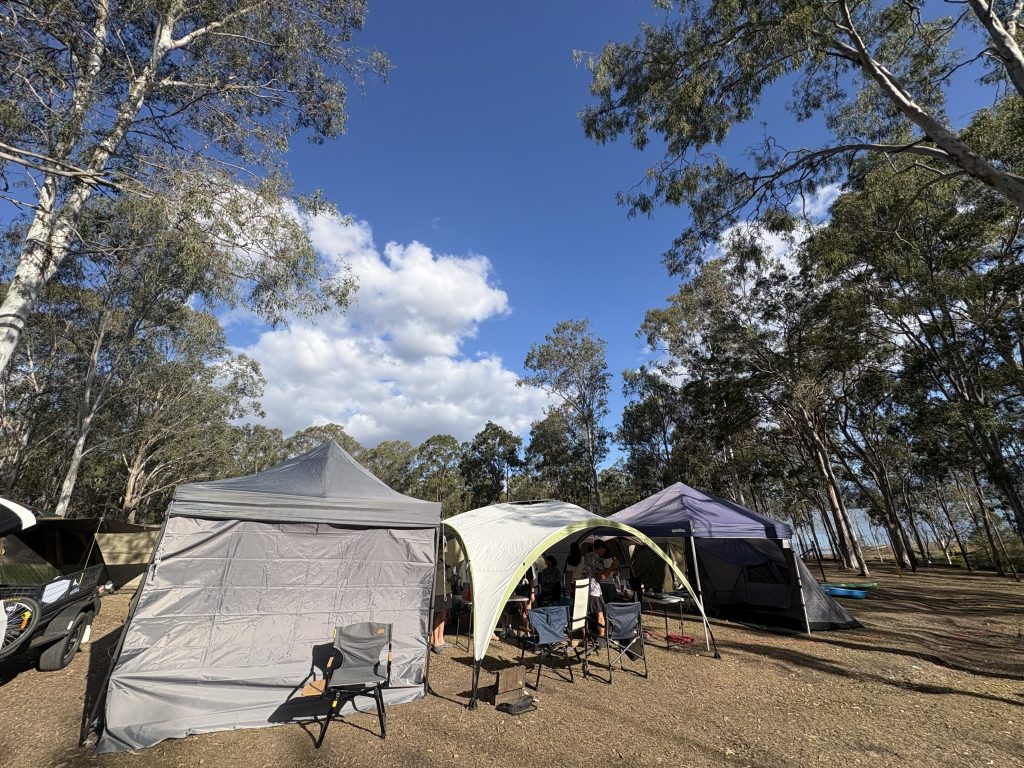
We bought our Dune 4WD 3×3 gazebo from Anaconda in 2024 for about $179.00, and We’ve now taken it on 4 trips, including Amity Point and Lake Moogerah. I paid for it myself, and this isn’t a sponsored review.
In this guide, I’ll share some practical advice on choosing sand pegs and setting up a gazebo on Australian beaches, along with my experience using the Dune 4WD gazebo.
1. Why Standard Tent Pegs Struggle in Sand
Standard steel tent pegs usually have a relatively narrow profile. They work well in firm soil because the surrounding ground provides resistance when the peg is pulled.
Beach sand behaves differently.
- Loose surface sand: Dry, loose sand offers limited resistance, making it easier for ordinary pegs to pull out.
- Changing ground conditions: Wind, movement around the campsite and shifting sand can gradually loosen an anchor.
- Larger shelters: Gazebos and awnings have a much larger surface area than tents, allowing wind to put considerable force on their frames and anchor points.
This is why purpose-designed sand pegs are worth considering for beach camping.
Types of sand pegs
There are several options available:
Wide plastic sand pegs
These are usually longer and wider than standard tent pegs. Their larger surface area helps them hold in loose sand and makes them a lightweight option for smaller tents and shelters.
Spiral or screw-in sand pegs
These pegs have a spiral shape or threaded profile that helps them grip the surrounding sand. They are available in different lengths and materials, including metal and heavy-duty polymer.
Some products, such as GroundGrabba-style screw pegs, are designed specifically for difficult ground conditions. When selecting one, check the length, material and intended application rather than relying on appearance alone.
For larger shelters, I would generally look at longer, purpose-designed sand anchors rather than relying on the small pegs supplied with a standard tent.
2. Choosing a Gazebo for Beach Camping: My Dune 4WD Experience
A gazebo is one of the most useful additions to a family beach campsite. It provides shade for meals, cooking and relaxing during the day.
However, carrying a gazebo means using some of your valuable 4WD storage space, so it is worth choosing one that suits your camping style.
My personal choice: Dune 4WD 3m x 3m Gazebo
What I like most is the frame. It’s Powder Coated Steel, and two of us can set it up in about 5 minutes. It fits on our Prado’s roof platform alongside the tent.
We usually add mesh / solid side walls. the mesh keeps insects out while letting air through, and the solid wall block the afternoon sun and the breeze when it cools down.
The downside: the carry bag is awkward to fit onto the roof and the walls are sold separately.
Of course, a sturdy frame does not mean a gazebo is windproof. Proper anchoring is still important, particularly when camping in exposed coastal locations.
Aluminium frame versus steel frame
Steel frames are generally strong but can be heavy and bulky. Aluminium frames offer a lighter alternative and can be easier to transport and assemble.
For family camping, a 2.5m x 2.5m or 3m x 3m gazebo can provide useful shade. Check the manufacturer’s stated weight and packed dimensions before buying. Not every gazebo is lightweight, and frame strength varies considerably between models.
Ventilated canopy design
Some gazebos include a roof vent or canopy design intended to help reduce wind pressure.
This can be useful, but a vent does not make a gazebo windproof. The frame, fabric, anchor points and overall setup still need to be suitable for the conditions.
Sandbags for additional stability
Sandbags are a practical addition because you can transport them empty and fill them when you arrive at the beach.
Attaching suitable sandbags to the gazebo legs adds weight at ground level and can help improve stability.
Make sure the bags are securely attached and that the gazebo manufacturer’s instructions allow this type of additional loading.
3. Practical Beach Gazebo Setup Tips
At Amity Point, the afternoon wind picked up so suddenly that a gust nearly lifted our gazebo, even though the morning had been calm. We had to hold the legs while someone added more pegs and sandbags. Since then, we set up the gazebo as if a strong wind is coming, every time.
Our setup routine on the beach.
- Check the wind direction first, and face the back of the gazebo into it.
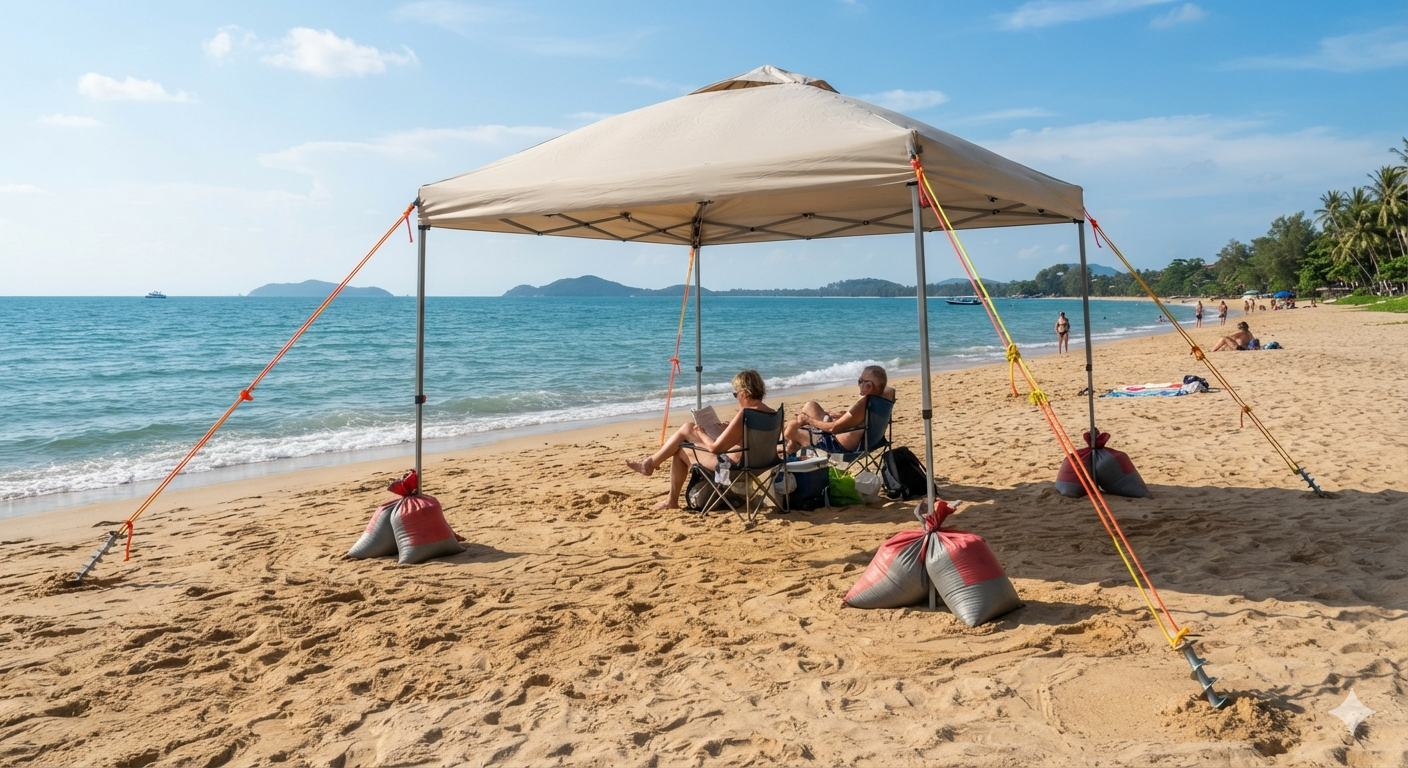
- Screw the sand pegs in at an angle, leaning away from the gazebo, so the guy ropes pull against them.
- Add guy ropes on all four corners. We tie a bit of bright tape on them so nobody trips at night.
- Fill 4 sandbags with beach sand and strap one to each leg.
- Drop it when the wind gets too strong. If the frame starts rocking, we lower the gazebo or pack it away. No peg can beat a strong coastal gust.
4. Comparing Beach Camping Anchor Options
Different anchor types suit different camping conditions. The following table provides a general comparison rather than a laboratory-tested performance rating.
| Anchor type | Main advantage | Limitations | Best suited for |
|---|---|---|---|
| Standard steel pegs | Small and lightweight | Can pull out easily in loose sand | Firm soil and grass |
| Wide plastic sand pegs | Lightweight with a wider profile | Holding performance depends on sand conditions | Small tents and light shelters |
| Spiral screw-in sand pegs | Designed to grip loose ground | Can be bulkier and require more effort to install | Larger tents, gazebos and guy ropes |
| Sandbag anchors | Can be filled at the campsite | Add weight and need secure attachment | Additional gazebo leg stability |
For a family beach camping setup, I would consider combining suitable sand pegs with guy ropes and sandbag weights rather than depending on a single anchoring method.
Final Thoughts
Beach camping is a great way to enjoy Australia’s coastline, but the equipment needs to suit the conditions.
After 4 trips, our Dune 4WD gazebo has earned its spot on the roof. The real lesson, though, is that the gazebo is only as good as what’s holding it down. Good sand pegs, guy ropes and sandbags matter more than the gazebo brand.
You can see how we used this setup with three families at Moogerah Lakeside Bush Retreat and on the beach at Amity Point. For everything else we pack, see our Family Camping Checklist.
Most importantly, never underestimate coastal wind. A well-secured gazebo is useful, but knowing when to lower or pack it away is just as important.
Leave a Reply